
Understanding the Different Types of Foundations for Robust Construction
The structural integrity of any building hinges critically on its foundation. Far from being a monolithic concept, there are several different types of foundations, each engineered to address specific geotechnical conditions, structural loads, and project requirements. At BearLake.Build, we specialize in assessing these variables to implement the optimal foundation solution for properties across the Bear Lake Valley, from Garden City to Fish Haven and beyond. This comprehensive guide will delve into the technical aspects of various foundation systems, providing a detailed understanding essential for any construction endeavor.
Shallow Foundations: The Commonplace Solutions
Shallow foundations are characterized by their depth, which is typically less than their width, or less than 10 feet deep. They are suitable when stable soil strata capable of supporting structural loads are present relatively close to the ground surface.
Slab-on-Grade Foundations
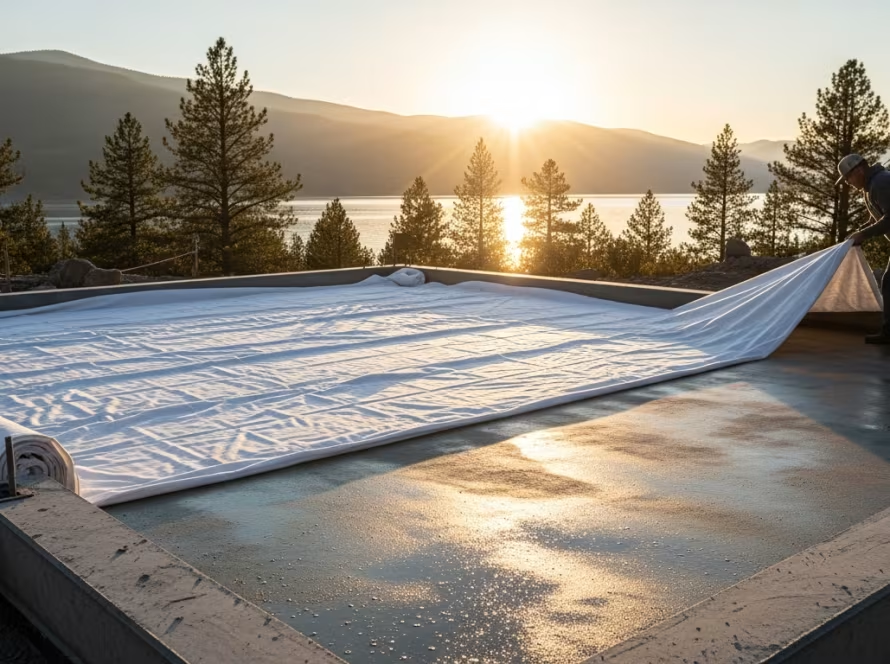
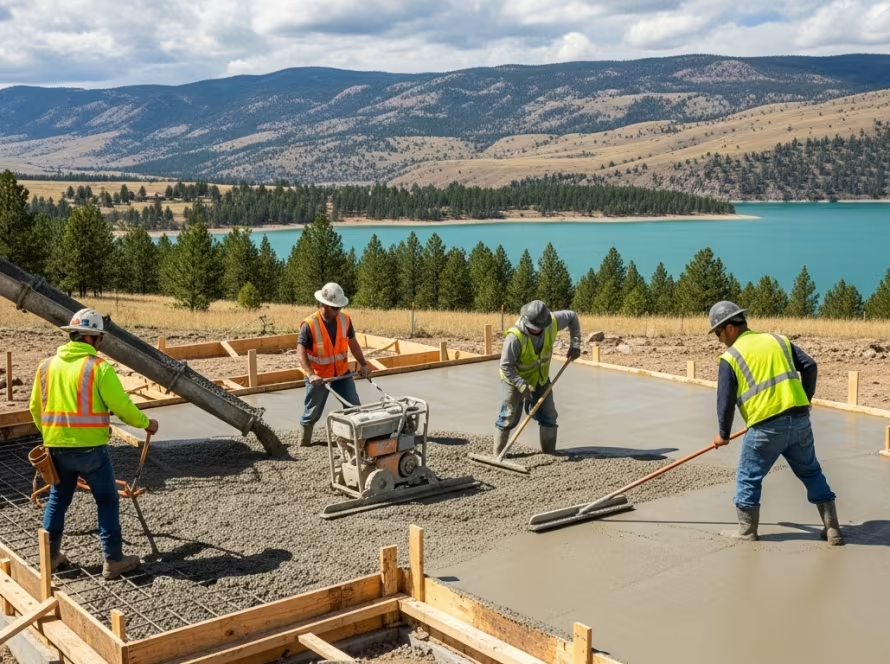
A slab-on-grade foundation is a monolithic concrete slab poured directly on the ground. This system integrates the foundation and the ground floor into a single structural element. It is particularly prevalent in regions with minimal frost heave potential or where extensive excavation is impractical or unnecessary. The slab typically rests on a prepared base of compacted granular fill, often incorporating a vapor barrier to mitigate moisture migration. Reinforced with steel rebar or mesh, the slab distributes the building’s weight evenly over the underlying soil. Perimeter edges are often thickened to form an integral footing, transferring concentrated loads from exterior walls. Advantages include cost-effectiveness, rapid construction, and inherent resistance to pest infestation. However, repairs to under-slab utilities can be complex and costly. BearLake.Build frequently employs reinforced slab-on-grade systems for garages and simpler residential structures where soil conditions permit.
Crawl Space Foundations
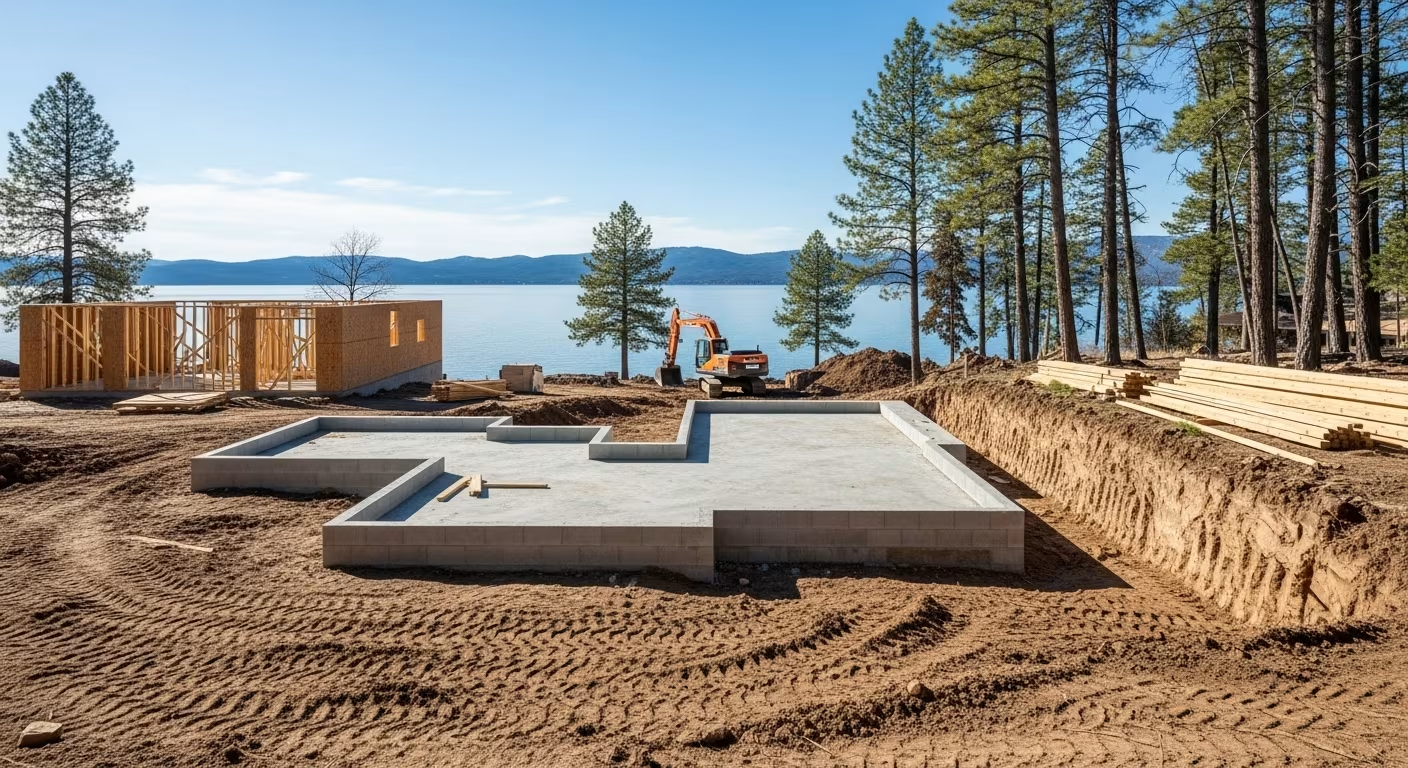
Crawl space foundations elevate the structure off the ground, creating a shallow, accessible space between the ground and the first floor. This space, typically 2 to 3 feet high, allows for easier access to plumbing, electrical wiring, and HVAC ductwork compared to slab-on-grade. The foundation itself consists of concrete footings poured below the frost line, supporting concrete block or poured concrete stem walls. These stem walls, in turn, support the floor joists and subfloor. Crawl spaces can be vented or unvented (encapsulated). Vented crawl spaces rely on natural air circulation to manage moisture, while encapsulated crawl spaces are sealed and often conditioned, offering superior energy efficiency and moisture control. The choice between vented and encapsulated depends on climate, local building codes, and desired performance characteristics. While offering accessibility, crawl spaces can be susceptible to moisture issues, requiring diligent waterproofing and ventilation strategies.
Basement Foundations
Basement foundations represent a significant excavation, creating a full-height, habitable or semi-habitable space beneath the ground floor. Structurally, they are similar to crawl spaces in that they utilize footings and stem walls, but these walls extend much deeper, often 8 to 10 feet or more, to create a usable interior space. Basement walls are typically constructed from poured concrete or concrete masonry units (CMUs) and are designed to resist significant lateral earth pressures and hydrostatic forces. Comprehensive waterproofing systems, including exterior membranes, drainage boards, and perimeter drain tiles (French drains), are critical for preventing water intrusion. Basements offer substantial advantages in terms of increased usable square footage, enhanced structural stability, and protection against severe weather. They are particularly popular in colder climates where foundations must extend below a deep frost line, making the additional excavation for a basement a logical extension. For complex residential projects in the Bear Lake region, a well-engineered basement by BearLake.Build can add significant value and functionality.
Deep Foundations: When Shallow Isn’t Enough
When shallow soil layers lack the bearing capacity to support a structure, or when structural loads are exceptionally heavy, deep foundations are employed to transfer loads to stronger, deeper soil or rock strata.
Pier and Beam Foundations
While often categorized with shallow foundations due to its typical depth, the pier and beam system shares characteristics with deep foundations in its load transfer mechanism. This system involves concrete piers (or columns) extending into the ground, often below the frost line, which then support a grid of concrete or timber beams. These beams, in turn, support the floor joists. The space created between the ground and the structure is similar to a crawl space but is typically more open. Pier and beam foundations are excellent for sloping sites, allowing for easier leveling, and can be more forgiving of expansive or shifting soils than a monolithic slab. They also provide superior ventilation beneath the structure, which can be beneficial in certain moisture-prone environments. However, they may require more extensive formwork and labor than a simple slab.
Piles and Caissons (Drilled Shafts)
Piles and caissons are true deep foundation elements, used when very heavy loads must be transferred to deep, stable soil or rock. Piles are long, slender elements driven or vibrated into the ground, or cast in place in a pre-drilled hole. They can be made of timber, steel, or concrete. Caissons, also known as drilled shafts, are larger diameter, cast-in-place concrete cylinders constructed by excavating a shaft and then filling it with concrete, often reinforced with steel cages. The choice between piles and caissons depends on soil conditions, load requirements, and construction logistics. Piles are effective in transferring loads through friction along their length or by bearing on a strong stratum at their tip. Caissons offer higher bearing capacity and are often used for very heavy structures like high-rise buildings or bridges. While less common for typical residential construction in the Bear Lake Valley, BearLake.Build possesses the expertise to manage projects requiring such specialized deep foundation solutions for larger commercial or public works endeavors.
Factors Influencing Foundation Choice
Selecting the appropriate foundation system is a complex engineering decision influenced by multiple interacting factors:
- Soil Conditions (Geotechnical Report): This is paramount. A comprehensive geotechnical investigation provides critical data on soil type, bearing capacity, moisture content, and potential for settlement or expansion. Clay soils behave differently than sandy soils, and bedrock offers different support than unconsolidated fill.
- Climate and Frost Line: In regions like the Bear Lake Valley, where winter temperatures drop significantly, the frost line is a critical consideration. Foundations must extend below this depth to prevent damage from frost heave, which occurs when water in the soil freezes and expands.
- Structural Loads: The weight and distribution of the building’s loads (dead loads, live loads, wind loads, seismic loads) dictate the required bearing capacity and design of the foundation.
- Site Topography: Sloping sites may favor pier and beam or stepped foundations, while flat sites are more amenable to slab-on-grade or full basements.
- Budget and Schedule: Deep foundations are generally more expensive and time-consuming than shallow foundations. Project budget and timeline often influence the feasibility of different options.
- Local Building Codes: All foundation designs must comply with local building codes, which specify minimum depths, reinforcement, and construction practices.
- Environmental Impact: Considerations like groundwater levels, seismic activity, and proximity to water bodies can also influence foundation design and material selection.
Bear Lake Valley Considerations for Different Types of Foundations
The unique geographical and climatic characteristics of the Bear Lake Valley, encompassing areas such as Garden City, Fish Haven, and St. Charles, necessitate a nuanced approach to foundation design. Our region experiences significant seasonal temperature fluctuations, leading to a substantial frost line that mandates deeper footings to prevent structural damage from frost heave. Additionally, varying soil compositions, from lakeside silts to more stable upland soils, require thorough geotechnical analysis for every project. BearLake.Build leverages extensive local experience to navigate these challenges, ensuring that whether you choose a robust basement for a custom home or a durable slab-on-grade for an accessory dwelling, your foundation is engineered for longevity and performance in our specific environment. We understand that the stability of your investment begins literally from the ground up.
Why Choose BearLake.Build for Your Foundation Needs
At BearLake.Build, we pride ourselves on delivering superior construction services, with a particular emphasis on foundational excellence. Our team of experienced professionals understands the intricacies of foundations and concrete work, ensuring that every project, from a modest cabin to a sprawling custom estate, receives a meticulously engineered and expertly executed foundation. We combine cutting-edge techniques with time-tested practices, always prioritizing structural integrity, durability, and compliance with all local regulations. Our commitment to quality means your project starts on the strongest possible footing. For a broader overview of our capabilities, visit our homepage.
Conclusion: The Bedrock of Your Project’s Success
Understanding the different types of foundations is fundamental to successful construction. Each foundation system offers distinct advantages and is suited to specific conditions. From the simplicity of a slab-on-grade to the complexity of a deep pile system, the choice directly impacts a building’s stability, longevity, and overall performance. BearLake.Build is your trusted partner in the Bear Lake Valley, providing expert guidance and execution for all your foundation requirements. We ensure that your investment is built on a solid, secure, and expertly designed base, tailored precisely to your site and structural needs. Don’t compromise on the most critical element of your construction project.
Ready to discuss your foundation project or any other construction needs? Contact BearLake.Build today to schedule a consultation. Call us directly at (208) 231-1102, and let our expertise lay the groundwork for your success.